Skip to content
Women Without Borders

International working platform

Women Without Borders

Connecting women leaders from business, politics, science, culture and public life

We are building a living network for mutual support, shared know-how, joint projects and real social impact.

Our vision and goal

Why the platform exists

What we see

Women in the Czech Republic and around the world achieve exceptional results — in business, politics, science and culture. Yet they still run into structural barriers, isolation and a lack of space for genuine collaboration with one another.

What we are building

Women Without Borders is an international working platform designed to overcome those barriers. Our goal is not another networking event — we want to create a living, functioning ecosystem where experience, capacity and the courage to act together come together. The platform is a space for those who want not only to inspire, but also to change things in practice.

Five pillars

What the platform stands on

The platform rests on five interconnected pillars that form a complete framework for collaboration and real impact.

  • 01

    Support and contacts

    A strong network is not only about contacts — it is about trust, access to expertise and the certainty that a community which understands you stands behind you.

    • Expert consultations Access to experienced specialists in key areas — legal, financial, strategic and personal advice within reach.
    • Capital and investment Connections to investors, funds and programmes focused on supporting women-led projects in the Czech Republic and abroad.
    • International contacts Direct links to international partners, organisations and initiatives that open doors beyond borders.
    • A safe base An environment without judgement, where challenges can be shared openly, solutions sought and feedback received from equal partners.
  • 02

    Joint projects

    The platform is a place where ideas do not stay on paper. We connect capacity, resources and the courage to deliver projects with measurable impact.

    • Business and growth Joint business ventures, startup cooperation, shared resources and experience. We do business more intelligently when we pull together — across fields and across borders.
    • Society and culture Initiatives focused on equal opportunity, cultural projects, educational programmes and public discourse. Women Without Borders actively shapes the environment it works in.
  • 03

    The real challenges women face

    We do not work with idealised success stories. We address the challenges women actually live through — and look for concrete, workable solutions.

    • Specific cases We analyse individual situations, look for possible solutions and connect women with experts, institutions, the non-profit sector and public administration.
  • 04

    A new model of governance

    We believe the strongest structures are not pyramids but networks. Every member of the platform is an equal node.

    • Network synergy Decision-making is distributed, responsibility is shared, and value multiplies with every new collaboration.
    • Shared leadership Rotating coordination prevents power from centralising. Every voice at the table carries weight.
  • 05

    International dimension

    Women Without Borders is not a local project. Our ambitions reach far beyond the Czech Republic.

    • Cross-border partnerships We actively build relationships with partner organisations in Europe, the USA and other regions. We share models that work and adapt them to the local context.
    • Presence on the global stage The platform opens access to international forums, conferences and negotiating tables where decisions affecting women’s lives worldwide are made.
    • Exchange of experience and mentoring International mentoring programmes and exchange visits give members a perspective that reaches beyond their immediate environment.

The real challenges women face

The topics we work on

We do not work with idealised success stories. We address the challenges women actually live through — and look for concrete, workable solutions.

  • 01

    Growing a business

    How to scale a project, secure funding and build a sustainable business in a competitive environment.

  • 02

    Balancing roles

    How to be an ambitious professional and a fulfilled partner, mother or carer — without having to choose just one.

  • 03

    Integration abroad

    How to establish yourself in a new environment, build credibility and maintain an international career without losing your identity.

  • 04

    Professional life at 45+

    How to stay relevant, visible and fully engaged at a time when society writes women off far too quickly.

Philosophy of collaboration

Open architecture

“We are not presenting a finished, fixed structure. Our goal is to listen and to build the platform together with you.”
— Women Without Borders

Women Without Borders is emerging as a living organism — shaped by those who create it. Every voice at the table carries weight. Every experience enriches the whole. We believe the best solutions come about when the people they concern stand at their origin.

Traditional models

  • Hierarchical structures and centralised decision-making
  • Competition instead of collaboration
  • Closed groups with limited access
  • A uniform approach with no respect for diversity

Our way — network synergy

We believe the strongest structures are not pyramids but networks. Every member of the platform is an equal node — bringing her expertise, connecting others and drawing on shared potential. Decision-making is distributed, responsibility is shared, and value multiplies with every new collaboration. This model is not only more effective — it is fairer.

We come with an open architecture — and we invite you to co-author its completion.

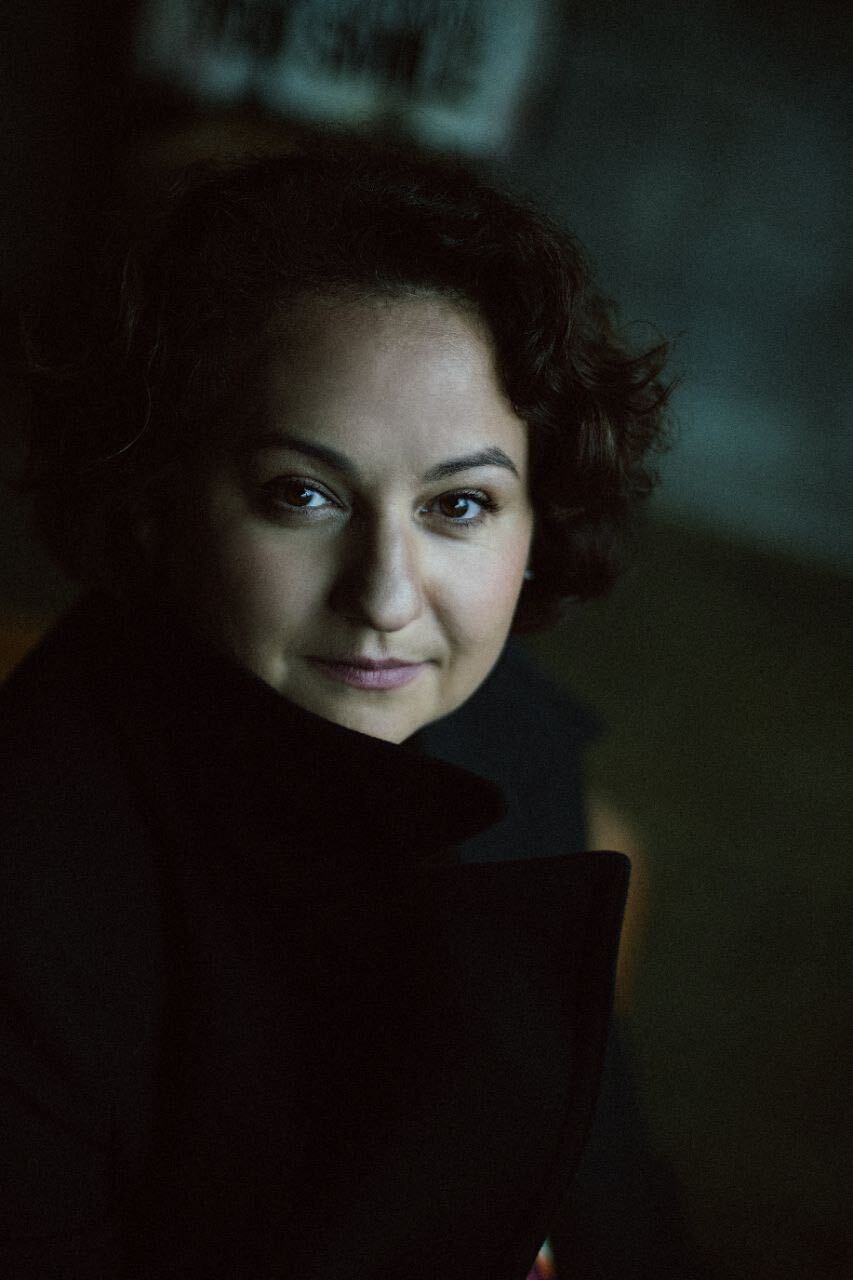
Portrait of Alina Akhmetshina, founder of the Women Without Borders platform

Founder

PhDr. Alina Akhmetshina

founder and chairwoman of the Women Without Borders platform

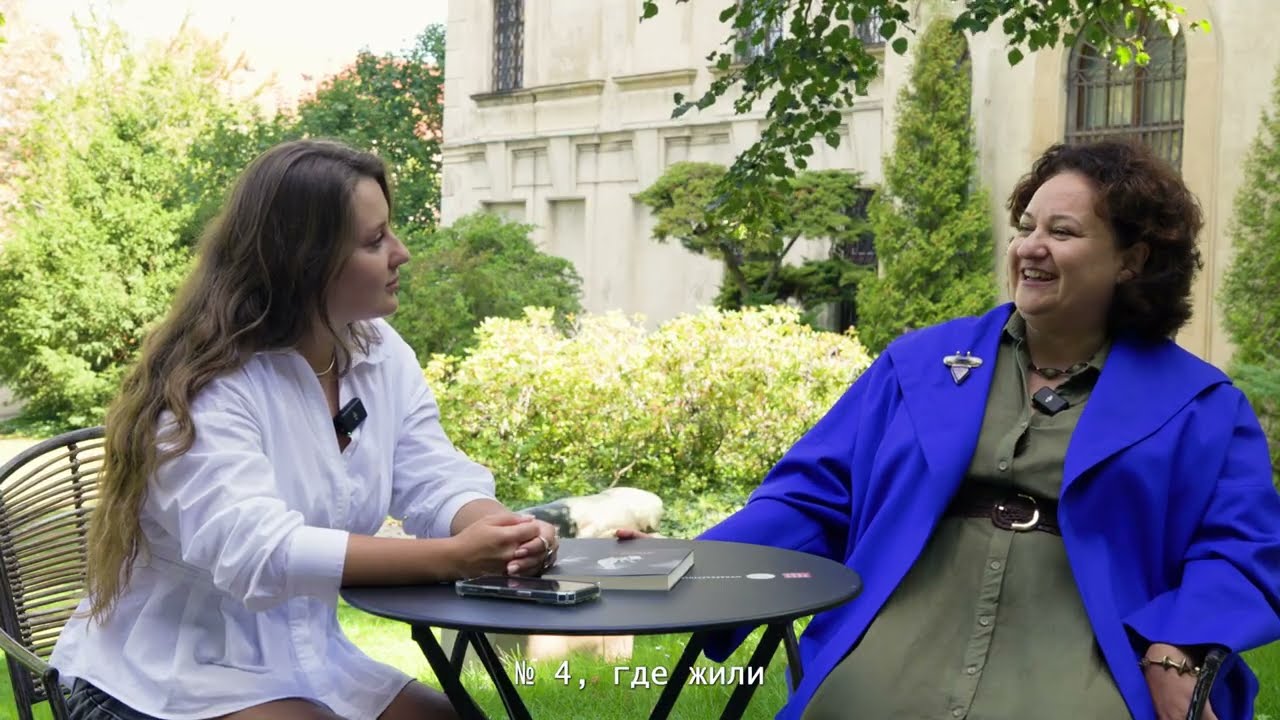
Alina Akhmetshina has lived in the Czech Republic for more than 25 years. She is the author of the book “Nine Lives of One Woman”, an entrepreneur, an organiser of social and cultural projects, and a woman with the experience of living between different cultures, languages and social environments.

Her work has long focused on integration, women’s experience, personal freedom, civic engagement, dialogue between communities and support for people looking for their place in a new country. She has experience with projects in education, culture, work with foreign nationals, public communication and community building.

She founded the Women Without Borders platform as a space for women of different professions, ages, backgrounds and life experiences to meet. Its aim is to create an environment for mutual support, sharing contacts, collaboration, professional growth, public debate and the search for new forms of women’s influence in society.

Alina believes that women can be not only a support to one another, but also an active force in public life — in culture, business, education, social projects, politics and international dialogue.

Meetings

Meetings of the Women Without Borders platform

The platform works through regular working meetings — with concrete topics, case studies and representatives of institutions, non-profit organisations and the professional community.

Past

Teenage mental health and young people’s orientation after secondary school

6 November

1. Slovanské gymnázium (time to be announced)

On 6 November 2026, another working meeting of the Women Without Borders platform will take place. This time we will focus on two closely related topics: the mental health of teenagers, and the career orientation of young people as they move from secondary school into further study or work.

For many young people, adolescence and the first decisions about the future come with great pressure. School, family expectations, social media, and uncertainty about their own identity, relationships and future profession can create long-term stress. At the same time, people increasingly talk about anxiety, depression, self-harm, eating disorders, social isolation and loss of motivation.

That is why we want to ask not only how to deal with a crisis once it has happened, but above all how to prevent it.

Read more

We will discuss, for example, how parents and schools can recognise the first warning signs, how accessible psychological and psychiatric help is today, what role school psychologists, paediatricians, counselling centres and non-profit organisations play, and where young people most often run into obstacles in the support system.

The second part of the meeting will be devoted to the question:

How is a young person at 17 or 18 supposed to know what they want to be?

Many students leave secondary school without a clear idea of their abilities, their options and the real labour market. Some go on to university only because it is expected, others choose a field without enough information, and still others have no idea where to start looking for work.

We therefore want to open up the topic of modern career orientation — not as a one-off test, but as a longer process that helps a young person get to know their own abilities, interests, personality and real options.

We will look for answers to the question of how to better connect:

schools – parents – psychologists – career counsellors – companies – universities – public institutions.

We are also interested in whether students should have more opportunities for short-term internships, mentoring, company visits or meetings with people from different professions before they finish school.

An important question will also be the link between the two topics. Uncertainty about the future is not only a matter of career. For a young person it can mean a feeling of failure, a loss of self-confidence or long-term psychological strain.

That is why we want to look for a model that does not merely tell a young person:

“You have to decide what you will do.”

But helps them find out:

“What am I good at? What interests me? What are my options? Where can I try it out? And who will help me take the next step?”

As at previous meetings of the Women Without Borders platform, we do not want to stop at general discussion. The aim is to connect experts, schools, parents, young people, public institutions and employers, and to look for concrete possibilities for cooperation and practical solutions.

The Women Without Borders platform is built on a simple principle:

ASK & OFFER – What do you need? What can you offer?

This principle can be of exceptional importance especially around the younger generation. One person can offer professional help, another mentoring, another an internship, work experience, a contact or inspiration.

The mental health and professional future of young people are not two separate topics. They are part of the same question: how to create an environment in which a young person can grow up safely, get to know themselves and find their place in society.
Past

From the debt trap to legal work

1 October

Prague City Hall

On 1 October 2026, another working meeting of the Women Without Borders platform took place. This time we decided not to limit ourselves to a general discussion about the position of women, but to take one concrete life story and use it to look at how the individual parts of the system work in practice — or fail to.

The main topic of the meeting was the situation of a woman aged 55+ who is trying to move from a long-term insecure work and financial situation into stable, legal employment, while at the same time facing older debts, low income and the risk of losing her financial stability.

The case showed that the problem often does not lie only with the individual. A person may be motivated to work legally, actively look for a job and try to deal with their obligations, and still run into several interconnected obstacles.

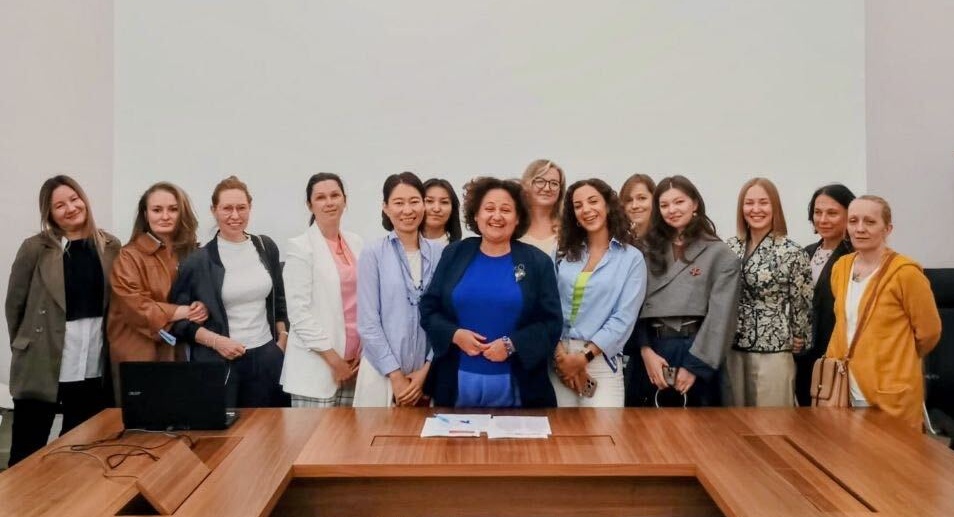
Participants of the Women Without Borders meeting on 1 October — group photo
Read more

During the meeting we focused mainly on these questions:

  • how a debt trap arises when a person moves between different forms of employment and is not properly informed about mandatory contributions;
  • what role health and social insurance play, and how older debts, penalties and instalment plans can be dealt with;
  • why it can be hard for a woman aged 55+ to find stable employment even after years of effort and dozens or hundreds of CVs sent out;
  • what tools the Labour Office has for people who genuinely want to move into legal employment;
  • what happens when a person owns their home but does not have enough income for everyday living costs;
  • how debt repayment can be set up so that a person can at the same time pay for housing, basic needs and their family;
  • why individual institutions are often able to deal only with “their part” of the problem, while no one leads the whole case from the beginning to a real result.

One of the important topics was also the line between individual responsibility and the responsibility of the system.

Our aim is not to relieve people of personal responsibility. But it is equally not enough to say: “Find a job and pay off your debts.” If legal employment means immediate enforcement against income, while the person still has to pay for housing and everyday costs and support a family, a paradoxical situation can arise in which the move into legal work is economically almost impossible.

This is where we ran into one of the main problems of the current system: every institution deals with only one part of a life situation, but the person needs one functioning path.

That is why we discussed a model in which a single concrete case would bring around one table people from social services, the Labour Office, the health insurance company, a debt counselling centre, employers and possibly other experts.

The basic question was:

What can your institution do at this specific point — and what can it not do?

And then:

What needs to change so that a person does not merely pass from one institution to another, but has a real chance of getting back to a stable and legal life?

The meeting confirmed one of the core ideas of the Women Without Borders platform: real solutions often do not arise inside one institution, but between institutions.

That is why we want to develop the ASK & OFFER principle further — What do you need? What can you offer? Every participant can bring part of the solution: legal knowledge, a job opportunity, experience with the social system, mentoring, a contact, expert advice or the ability to connect other people.

In future we want to use such cases as practical case studies, in which we can identify the specific places where the system fails and at the same time propose realistic solutions.

One option is to create a pilot programme for a smaller group of women aged 55+, combining employment, debt counselling, social support and individual case coordination.

We therefore do not want to build Women Without Borders only as a space for networking and discussion.

We want to create a place where a concrete problem meets concrete people who hold part of the solution — and where a new functioning model can emerge from this cooperation.

This is where we see the meaning of horizontal cooperation between civil society, experts, public institutions and business.

Past

The first meeting of the Women Without Borders platform

11 September

Prague City Hall

On 11 September, the first meeting of the Women Without Borders platform took place at Prague City Hall.

The meeting was devoted to women from different national communities, professions, business areas and social environments getting to know one another. Around one table sat women active in culture, business, integration, education, social work, community projects and public life.

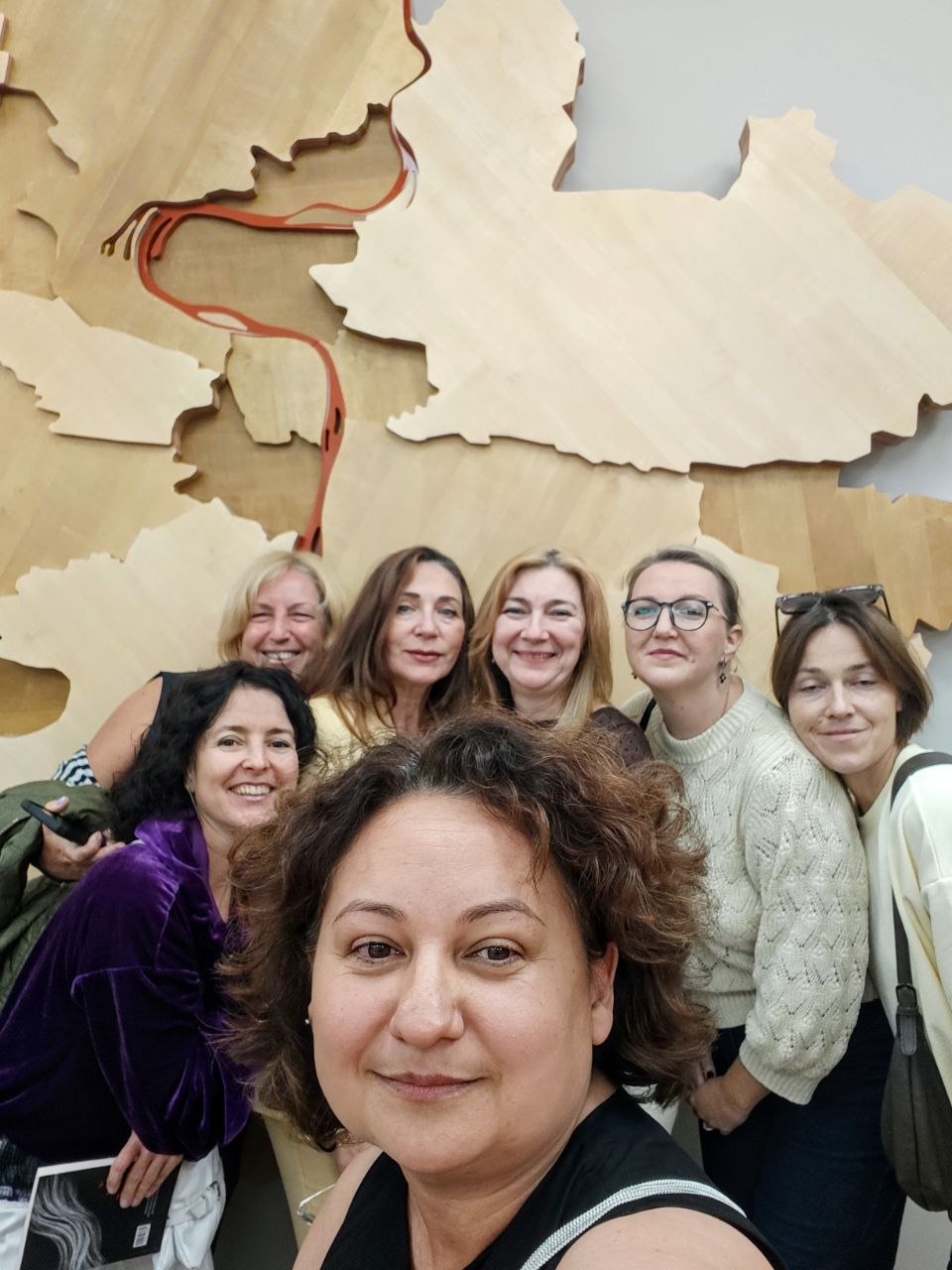
Participants of the first Women Without Borders meeting at Prague City Hall
Read more

Together we opened a discussion about the direction the platform should take, which topics matter to women living in Prague and in the Czech Republic, and how the platform can help not only through general support but also through concrete work on individual cases.

We spoke about the need for mutual connection and for sharing contacts, experience and expertise, but also about how many women find themselves between systems in various life situations — between family and work, between integration and isolation, between business and administration, between personal responsibility and insufficient support.

The goal of the Women Without Borders platform is to create space for practical collaboration among women across nationalities, professions and life experiences. The platform intends to address current topics, analyse specific cases, look for possible solutions and connect women with experts, institutions, the non-profit sector and public administration.

The first meeting confirmed that the platform can be a place where personal experience becomes a shared topic, where new contacts, concrete projects and space for the voices of women who want to be an active part of society come into being.

The meeting was a first step towards creating an open working platform that will gradually develop its goals, working formats, thematic groups, case studies and concrete projects focused on supporting women, integration, collaboration and public dialogue.

Get involved

Questions for you

The platform can only be as strong as the voices that create it. That is why we are turning to you with these key questions:

  • 1

    What can the platform bring you personally?

    Which support, contacts or opportunities would be most valuable to you? What are you missing in your professional life and not finding elsewhere?

  • 2

    What do you think is still missing?

    Which challenges, topics or groups of women should the platform include that it does not yet address? Where do you see gaps in our vision?

  • 3

    How can we create mutual value?

    What are you willing to bring to the platform — your expertise, network, time or projects? Where do you see the greatest potential for genuine collaboration?

Your thoughts, contacts and energy are the most valuable things we receive from you. After every meeting we send out a summary, conclusions and a concrete proposal for the next steps.